Research into action
Awareness sessions, practical demonstrations, and local support
Once I had analysed the Bhurja survey, I wanted the findings to be useful outside the research paper. I began organising sessions where farmers could ask questions, see how soil-testing kits work, and discuss soil-health practices in familiar language. That work has now taken Soil to Soul across 22 villages in Haryana and will constantly expand its reach!
Listening to the Land
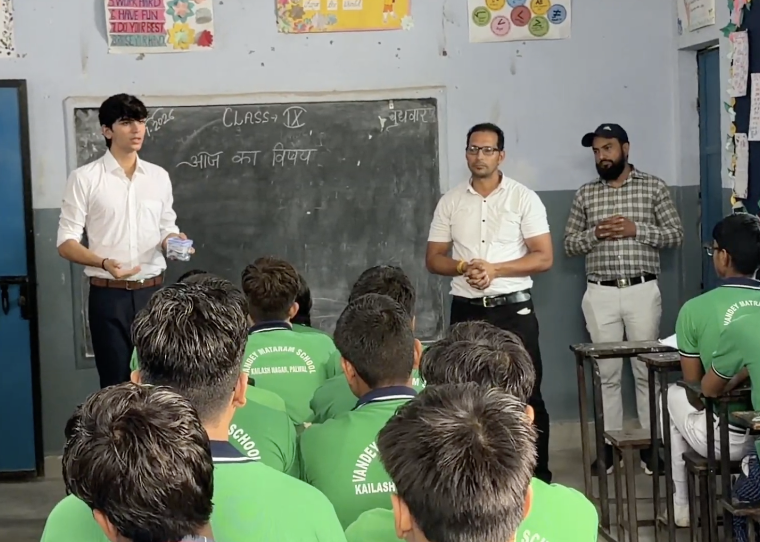
One of the most heartening parts of this journey was seeing how my friends, many of whom had never touched farmland, responded to my awareness posts. We organised a local talk for children with posters titled "What's Your Soil Type?" and shared short explanations of why farmers do soil testing.
I interviewed two grain vendors about how yield and crop taste have changed in the last ten years. Their answer was simple but profound: "Zameen pe pehle sukoon tha." (There was peace in the soil before.)
In just a span of 30 days, I did not save the soil. But I stopped ignoring it. I felt the texture of real earth, listened to farmers, and sparked curiosity among fellow students.

"Zameen pe pehle sukoon tha." — There was peace in the soil before.
The Impact & The Way Forward
My project showed me that soil isn't just a topic — it's a teacher. Here's what we learned together.
Reconnecting Youth
Students who had never touched soil began asking questions, attending talks, and sharing what they learned with their families.
Listening to Farmers
Through interviews and field visits, we captured oral histories and practical wisdom that textbooks don't teach.
Working with Land
Our aim is to constantly expand the project moving forward and contribute as much as we can towards bringing a good change for our local agricultural community.